


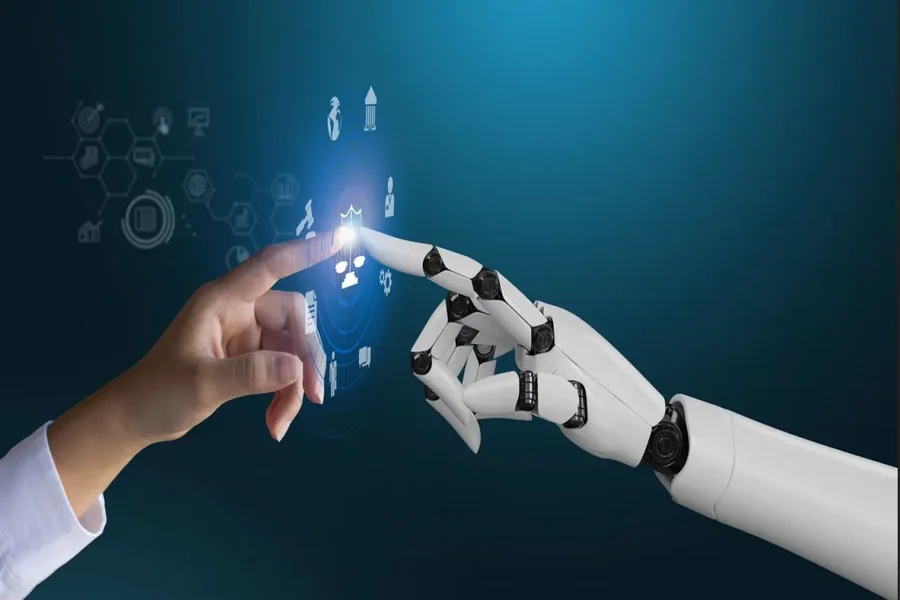
Technology has changed the lifestyle of people, their work and communication very fast. Artificial intelligence is among the greatest innovations of the modern world. The Future of Artificial Intelligence in Everyday Life 🤖 is becoming more apparent and intelligent systems can now be expected in human lives, simplifying tasks, making them faster and more efficient.
Artificial intelligence is defined as computer systems that are meant to imitate human intelligence. Such systems are able to make decisions with very little human intervention, learn through data and identify patterns. The technology that used to appear futuristic in the past has now become a part of daily life in the form of smartphones, smart homes, digital assistants, and automated services.
With the further development of AI, most spheres of life are expected to be affected by it. Intelligent technologies are changing the way people engage with the surrounding world in areas of healthcare and transport, education, and their own productivity. The knowledge of the future development of artificial intelligence will enable people and companies to anticipate the emerging changes.
Artificial Intelligence in Smart Homes
The home is one of the most observable spheres where artificial intelligence is making an impact on the daily lives of people. Smart home technologies utilize AI to automate activities, as well as enhance comfort to the homeowners.
Smart devices, including smart speakers, thermostats, lights, and security cameras, will be able to learn their user preferences and adapt on their own. As an example, a smart thermostat may learn the habits of the household and adjust the temperature to be more energy-saving.
AI-powered voice assistants have become a widespread occurrence in the contemporary home. They can respond to questions, operate intelligent gadgets, add notifications and even shopping lists. Gradually, they get to know the habits of members and become more sensitive to personal needs.
Even smart appliances have become smarter. Refrators are able to monitor food supply, washing machines to choose the most appropriate cleaning options and robotic cleaners know how to navigate around the rooms in order to be more effective cleaners.
With the development of the AI technology, the houses can be even more automated and personalized, which can make the daily living process easier and more effective.
AI in Healthcare and Medical Innovation
Another field where artificial intelligence is making tremendous contributions is in the field of healthcare. AI systems are becoming an increasingly popular tool that medical practitioners use to process complex health information and help in disease diagnoses.
AI-based medical imaging applications can identify suspicious scan patterns including X-rays and the MRIs and CT scans. The systems assist physicians in detecting diseases such as cancer, heart diseases and neurological illnesses earlier than the conventional way.
Another useful application of artificial intelligence in healthcare is predictive analytics. AI systems can detect trends on patient records and medical histories that denote possible harm to their health. It enables physicians to offer preventive services before the situations get out of control.
AI is also used in drug development and medical research. Machine learning algorithm can examine chemical substances and biological samples to determine possible treatments faster than in the traditional research practice.
Artificial intelligence-enabled personalized medicine might be more widespread in the future. Treatments may be tailored according to the genetic information and the health data of an individual, and will thus result in better care.
Artificial Intelligence in Education
Artificial intelligence technologies are also being implemented in education systems across the globe in order to improve learning processes. AI-based solutions can assist both students and teachers, as well as make the learning process more effective.
One of the most promising technologies is the use of personalized learning platforms. These systems investigate the performance of students and alter educational material in accordance with their learning styles and developmental level.
As an example, an AI-based study system could offer more practice on areas where a student has difficulties and give an opportunity to cover simpler material much quicker. This individualistic model assists students to learn at their pace.
Artificial intelligence can be used to automate other tasks like grading assignments and classroom management data. This will help administrations to reduce the amount of work done by teachers because they can now devote more time in guiding and mentoring students.
Educational chatbots and virtual tutors are also becoming increasingly popular. These tools may respond to questions, clarify concepts and do this after the classes are over.
With the further development of educational technology, AI is likely to become a significant factor in offering more opportunities to learn that are more accessible and personalized.
AI and the Transformation of Work
The workplace is also changing with artificial intelligence automating the repetitive jobs and enhancing productivity. In the present world, AI-enabled tools can be found in many enterprises analyzing data and streamlining business processes, as well as assisting in decision-making.
Automation software is able to do the normal administrative work like to arrange a meeting, invoices and document arrangements. This will enable the employees to concentrate on more creative and strategic tasks.
Another field where AI has a significant influence is customer service. Virual assistants and chatbots will be able to answer frequent questions of customers, give advice on purchases, and solve problems.
The AI driven analytics applications assist organizations in interpreting huge data to detect trends and make sound decisions. These insights are used by marketing teams, financial analysts, and supply chain managers in order to make performance better.
Even though automation can alter the character of some jobs, it also opens new opportunities in the sector of data science, artificial intelligence engineering and digital technology management.
The human-technological efficiency of combining creativity and technology is also expected in the future of workplaces which will likely come in the form of collaboration between intelligent systems and humans.
AI in Transportation and Smart Cities
The future of transportation and urban development is also being influenced by artificial intelligence. AI is applied by smart transportation systems to enhance safety, efficiency, and environmental sustainability.
One of the most common examples of AI in transportation is self-driving vehicles. Such vehicles rely on sensors and cameras and machine learning algorithms to move along the roads and react to traffic conditions.
Artificial intelligence is another technology in traffic management systems that analyze traffic pattern and control signals in real time. This assists in minimizing congestion as well as reduces travel time in the busy cities.
AI may be applied in transportation networks to forecast traffic demand and schedule optimization. This will make transportation resources to be utilized efficiently and will minimize waiting of commuters.
Besides transportation, smart cities apply AI in controlling the energy usage, garbage collections, and community security. Data analytics and sensors aid city officials to make superior decisions that can enhance the living conditions in cities.
With the ever-increasing population in cities, artificial intelligence will be necessary in construction of sustainable and efficient urban environments.
Ethical Challenges and Responsible AI
The benefits of artificial intelligence are significant, but they do not happen in isolation; there are significant ethical and social issues associated with artificial intelligence. Such problems like privacy of data, bias of algorithms, and transparency should be taken into account.
Artificial intelligence is based on the vast datasets to study and make decisions. In case such datasets have biased or incomplete information, the algorithms derived can come up with unfair results. A concern that is still present is ensuring fairness and accountability of AI systems.
Privacy is another concern. People should take responsibility in handling many AI applications that gather and analyze personal data as one way of protecting the rights of people.
There is a collaboration between governments, researchers and technology companies to come up with ethical guidelines and regulations of artificial intelligence. Such attempts are directed at making sure that AI technologies can be applied in a responsible way and are useful to society in general.
The careful creation of artificial intelligence will be the key to preserving the trust and taking full advantage of the advantages of such technologies.
Final Thought
The concept of artificial intelligence is quickly becoming the central aspect of contemporary life. In the area of smart homes and healthcare to education and transportation, intelligent systems are changing everyday experiences, and making significant changes. The Future of Artificial Intelligence in Everyday Life 🤖 is likely to provide further innovation and technology will keep on changing.
On the one hand, AI can be used to achieve massive potential in efficiency and finding the solution to complex problems, but on the other hand, responsible development and ethics matter. The nature of balance between technological progress and social responsibility will assist in ensuring the artificial intelligence will be one that will benefit people, businesses and communities.
With more humans becoming accustomed to these innovations, artificial intelligence will not eliminate human creativity and judgment but contribute to them. Through collaborating with intelligent systems, the society will be able to open the doors to new possibilities of learning, growth, and development.
FAQs
What is artificial intelligence in everyday life?
Artificial intelligence in everyday life refers to the use of intelligent systems in daily activities such as smart home devices, digital assistants, healthcare technology, and automated services.
How is AI changing the way people live?
AI improves convenience and efficiency by automating tasks, providing personalized services, and helping people make better decisions through data analysis.
Will artificial intelligence replace human jobs?
Some routine jobs may be automated, but artificial intelligence also creates new opportunities in technology, data science, and digital innovation.
How does AI help in healthcare?
AI assists healthcare professionals by analyzing medical data, detecting diseases earlier, supporting diagnosis, and helping develop new treatments.
Is artificial intelligence safe to use?
Artificial intelligence can be safe when developed responsibly, with proper regulations, transparency, and attention to privacy and ethical concerns.
What industries benefit the most from artificial intelligence?
Industries such as healthcare, education, finance, transportation, and technology benefit significantly from artificial intelligence applications.
