


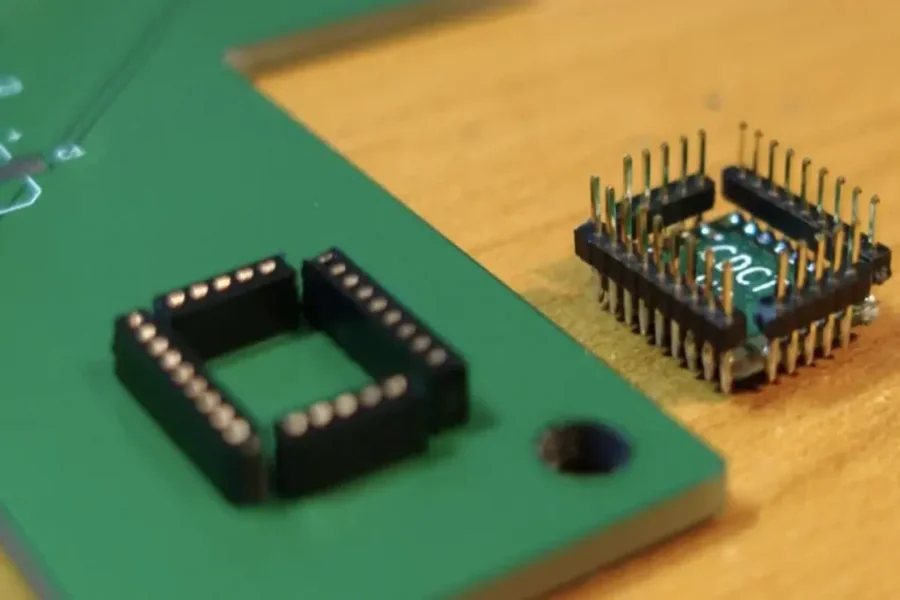
In modern electronics, connectors are essential for linking components and ensuring smooth signal transmission across a circuit. Among the various connector types used on printed circuit boards, round pin headers are known for their precision and strong contact performance. These connectors are often preferred in applications where durability and reliable electrical contact are critical.
What Are Round Pin Headers
Round pin headers are a type of PCB connector where the pins are cylindrical rather than square. These pins are typically machined with high precision and mounted on a plastic base, allowing them to be soldered onto a circuit board.
In general, pin headers are simple electrical connectors made up of rows of metal pins used to connect different electronic components.
Unlike standard square pins, round pins provide a smoother surface, which improves the quality of contact when inserted into matching sockets.
Structure and Design Characteristics
Round pin headers are designed with evenly spaced pins arranged in one or more rows. The pins are usually made from conductive materials such as brass and are often plated with gold or tin to improve conductivity and resistance to corrosion.
The circular shape of the pins allows for better insertion and removal, reducing wear on both the header and the socket. This makes them suitable for applications that require frequent connections and disconnections.
They are commonly available in different configurations, including single row and dual row layouts, depending on the number of connections needed.
Why Round Pins Are Preferred in Certain Applications
The round pin design offers several advantages over traditional square pins.
One of the main benefits is improved electrical contact. The smooth surface allows for more consistent connectivity, which is important in precision electronics.
They also provide better durability. Because of their shape, round pins experience less mechanical stress during insertion and removal.
Another advantage is compatibility with precision sockets. Round pins are often used with machined female headers, creating a tighter and more secure connection.
In many cases, components like 圓孔排針 are chosen when higher reliability and repeated usage are required in circuit connections.
Common Applications
Round pin headers are widely used in various electronic systems.
They are commonly found in development boards and modular electronics where components need to be connected and replaced easily.
In industrial equipment, they are used in systems that require stable and long lasting connections.
They are also used in testing environments where components are frequently inserted and removed.
In addition, they are often used in high precision applications where consistent signal transmission is important.
Types and Variations
There are several variations of round pin headers available depending on the application.
Straight headers are used for vertical connections between boards or components.
Right angle headers are designed for horizontal connections where space is limited.
Dual row configurations provide more connection points in a compact layout.
Different pin lengths and plating options are also available to suit specific requirements.
Key Factors to Consider
When selecting round pin headers, a few important factors should be taken into account.
Pin pitch must match the spacing of the PCB and other components.
Number of pins should align with the required connections.
Material and plating affect both performance and durability.
Mounting type determines how the header is installed on the board.
Choosing the right combination ensures compatibility and reliable performance.
Advantages of Round Pin Headers
Round pin headers offer several benefits that make them suitable for demanding applications.
- They provide excellent electrical conductivity and stable connections.
- They are more durable when used repeatedly compared to standard pin headers.
- They reduce wear on mating connectors, extending the lifespan of the overall system.
- They are compatible with precision sockets, making them ideal for modular designs.
These advantages make them a preferred choice in applications where reliability is essential.
Limitations to Be Aware Of
Despite their benefits, there are some limitations.
They are generally more expensive than standard square pin headers due to their precision manufacturing.
They may not be necessary for simple or low cost applications where basic connectors are sufficient.
Understanding the requirements of your project helps determine whether this type of connector is the right choice.
Conclusion
Round pin headers are a specialised type of PCB connector designed for improved durability and reliable electrical contact. Their cylindrical design, combined with precision manufacturing, makes them suitable for applications that demand consistent performance.
From industrial systems to development boards, these connectors play a key role in ensuring stable and efficient connections. By selecting the right configuration and understanding their advantages, engineers and designers can build more reliable and long lasting electronic systems.
