


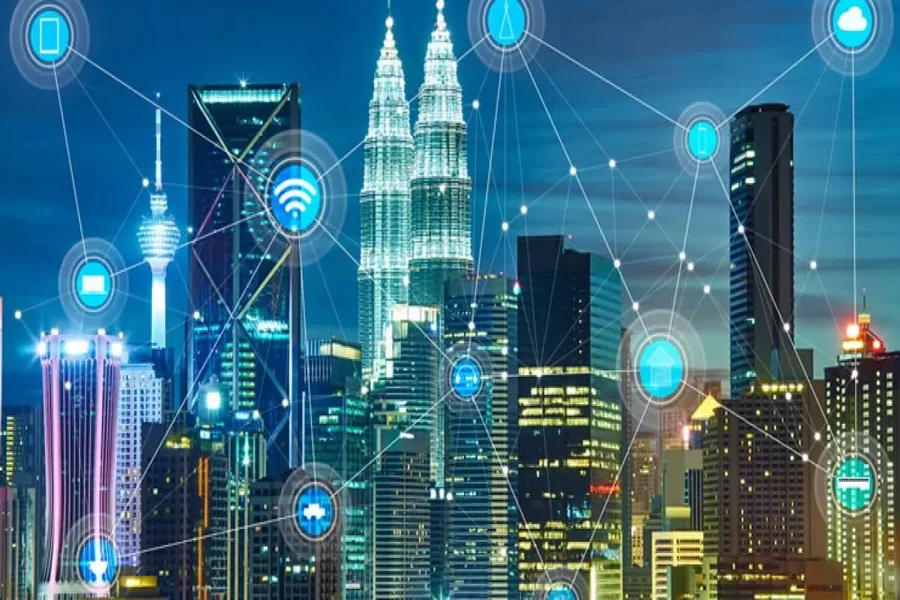
The world cities are increasing at a high rate as the population is increasing. The management of this growth needs innovative solutions that enhance infrastructure, sustainability and standards of living. The Role of Technology in Building Smart Cities has recently become a significant issue since governments and city planners use digital solutions to manage resources more effectively and establish safer and more connected spaces.
The Internet of Things, data analytics, artificial intelligence, and digital infrastructure are some of the examples of new technologies that are used by smart cities to enhance urban services. The technologies enable the city officials to track the traffic, control the energy use, enhance the civil security, and deliver a higher quality of services to the citizens.
Smart cities combine digital networks and real-time data in order to optimize their operations, instead of using only the traditional systems. The strategy assists cities to minimize wastage, to ensure better transportation and to better the city services. Due to the ongoing increase of urban populations, it is possible to propose that technology-oriented city planning will become the necessity of construction of the sustainable and efficient urban environment.
Smart Infrastructure and Urban Connectivity
Digital infrastructure of a smart city is considered to be one of the most significant aspects. Smart infrastructure refers to physical systems that have been linked together with digital technology, which includes roads, buildings, utilities, and transportation networks. These systems can be monitored and managed by the city administrators by sensors, communication networks and data platforms.
As an example, smart lighting may be used to control light levels automatically depending on the time of the day or the amount of pedestrian flow. This does not only enhance safety but also ensures that less energy is used. On the same note, smart water can identify any leak or abnormal water consumption and hence, cities will save resources and avoid wastage.
The high-speed internet and the availability of efficient networks is also a part of urban connectivity. Good digital connectivity is whereby residents, businesses and government services are able to communicate effectively using online systems.
With technology-linked infrastructure, cities will be able to react faster to issues like traffic jam, environmental variations, and demands of the population with regard to provision of services. Such a combined strategy is useful in the development of efficient and adaptable urban environments.
Intelligent Transportation Systems
One of the most obvious spheres in which technology is defining new cities is transportation. Smart transportation systems involve the use of sensors, cameras, and artificial intelligence that are used to control trafficking as well as enhance mobility.
Traffic management systems are capable of examining the real-time data attained by road sensors and modulate traffic lights based on the information. This aids in minimising the congestion and enhancing commuting time. Predictive analytics can also be applied to the public transportation system to predict the demand of passengers and maximize the schedule.
The new urban transportation environment also includes ride-sharing platforms and electric vehicles. Most cities are making investments in charging systems and intelligent parking solutions that assist motorists to find parking spots fast. Furthermore, regional infrastructure projects rely heavily on specialized traffic management in East Midlands https://trafficflowtm.co.uk/location/east-midlands/ to keep roadways safe and minimize disruption during smart grid and transport upgrades.
Another innovation that can change the face of transportation in future is the autonomous vehicles. The self-driving cars are based on sophisticated sensors and AI programs to find their way along the roads and avoid obstacles. Although the technology is still in its development stage, it can make roads safer and fewer accidents in traffic.
Cities could develop efficient and eco-friendly movement systems by incorporating technology into the transportation systems.
Sustainable Energy and Environmental Management
The modern urban development is very concerned with sustainability. Smart cities utilize technology to control energy use, pollution, as well as encourage environmentally friendly practices.
One of the ways in which the technology aids sustainability is through the smart energy grids. These grids, through digital monitoring systems, ensure much better control of the electricity supply and demand. They also incorporate renewable sources of energy like wind and solar energy into the current energy system.
Another significant aspect of a smart city is energy-efficient buildings. Buildings can heat, cool and turn on and off lights when sensors and automation systems are in place. This assists in minimizing energy wastage and minimizing the cost of operation.
Environmental monitoring systems also make a big contribution. There are sensors that can monitor the air quality, noise level and the weather in the different areas of a city. This data can be used by the city officials to enact policies that can enhance environmental health.
The smart cities are able to facilitate sustainability by incorporating technology to monitor and manage the environmental factors without compromising the comfort of the people living in such cities.
Smart Public Services and Citizen Engagement
Technology can also be used to increase their services to the people and make interaction between the citizens and their local governments better. The online solutions enable residents to enjoy the services easily and fast.
As an example, most cities today have web portals where their citizens can pay their bills, request permits, or even report local problems like broken roads, streetlights, etc. These online services are streamlining and simplifying government interactions.
Another field that has benefited smart technology is in the field of public safety. Surveillance systems, emergency response systems, and predictive analytics contribute to the quick reaction of the authorities to the incident and their ability to ensure the safety of the population.
The technologies of smart cities stimulate the citizen participation as well. Residents are able to share their views, raise concerns, and engage in local decision-making through mobile apps and online feedback systems.
Technology assists in establishing more transparent and responsive urban communities by enhancing the communication between governments and citizens.
Data and Artificial Intelligence in City Planning
Information is a key component of smart cities. The city systems are producing massive information through sensors, cameras, and networked machines. The analysis of this data will enable the city planners to make sound decisions regarding infrastructure and services.
Artificial intelligence is able to manipulate large datasets and extract patterns and trends that cannot be easily noticed. As an illustration, AI systems can be used to study the traffic patterns to enhance the design of the road or forecast energy usage in order to maximize the use of power.
Predictive analytics also allow city planners to get ahead of challenges that may arise in the future like population growth or environmental change. This assists them to come up with long term strategies to aid in sustainable development.
The use of data-driven decision-making would mean that the city planning process is founded on the facts and not assumptions. With the current increase in artificial intelligence, it is probable to anticipate faster adoption of the technology in the management of intricate city systems.
Challenges in Developing Smart Cities
Despite the numerous advantages brought about by technology there are also some challenges that come with construction of smart cities. Privacy and security of data is one of the key issues. Smart city systems generate big volumes of data, and its security is the most significant way to ensure people do not lose their confidence.
The second impediment is the cost of installing the advanced technology infrastructure. The creation of smart transportation networks, energy, and digital platforms is expensive. To fund these initiatives, governments need to be keen on budgets and partnerships.
The integration of technology may be complicated as well. Various systems should collaborate effectively, which involves the coordination of the providers of technological services, the city authorities, and the urban planners.
Lastly, the issue of digital inclusion should be brought up. The smart city technologies must be advantageous to the entire population, even those who might not be fully digital. Equal access to technology can be used to eliminate social inequalities in an urban setting.
It will be significant to respond to these challenges in the process of making smart cities sustainable, inclusive and secure.
Final Thought
The population in urban areas keeps rising, subjecting the infrastructure, resources and the public services to mounting pressure. Technology in the Construction of Smart Cities has become crucial in resolving these issues and developing more effective and sustainable cities.
Cities can enhance the livelihood of the people through smart transportation systems, renewable energy networks, digital public services, and data-based planning to improve their living standards. Technology helps the urban environments to work effectively in addition to helping in environmental sustainability and economical growth.
Although data protection and infrastructure expenses are only some of the issues that have to be considered, the opportunities of smart cities cannot be underestimated. The use of modern technologies will surely be improved in the future as the cities worldwide embrace more advanced technologies to make their communities safer, smarter, and more connected.
FAQs
What is a smart city?
A smart city is an urban area that uses digital technologies and data-driven systems to improve infrastructure, services, and quality of life for residents.
Why is technology important for smart cities?
Technology helps cities manage resources efficiently, improve transportation systems, enhance public safety, and provide better services to citizens.
What technologies are used in smart cities?
Common technologies include the Internet of Things, artificial intelligence, data analytics, smart sensors, and digital communication networks.
How do smart cities improve transportation?
Smart transportation systems use sensors and data analysis to manage traffic flow, optimize public transit schedules, and reduce congestion.
Are smart cities environmentally friendly?
Yes, many smart city technologies focus on energy efficiency, renewable energy integration, and environmental monitoring to promote sustainability.
What challenges do smart cities face?
Challenges include data privacy concerns, high infrastructure costs, technology integration issues, and ensuring equal access to digital services.
