


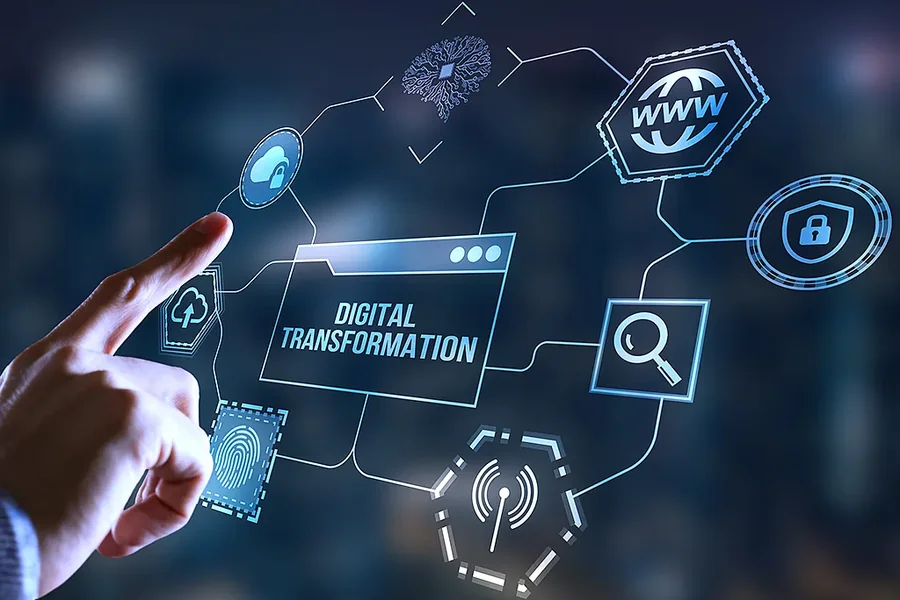
Technology is now one of the greatest forces that have developed the contemporary business environment. The article How Technology Is Transforming Modern Businesses can be observed in almost all spheres of business, retail and healthcare industry, finance and manufacturing. The digital tools, automation systems and data analytics are assisting business firms to be more efficient and compete in an ever-increasing global economy that is rapidly evolving.
Businesses used to depend so much on manual processes and the traditional communication methods. Modern technologies enable companies to automatize processes, study customer behavior, and optimize the processes. Such transformation has not only led to the growth in productivity but also to the new frontiers of innovation and growth.
Technology has been adopted by modern companies as a way of reaching its customers, enhancing decision making and responding swiftly to the dynamic market environments. With the current pace of digital transformation, a business that adopts technology has more chances of being competitive and successful.
The Rise of Digital Transformation
Digital transformation can be defined as an initiative of incorporation of technology in all facets of a business. It consists of reevaluating the conventional operations and switching to digital solutions that enhance the efficiency and customer experience.
Businesses in all industries are investing in online platforms, clouds, and automation applications. These technologies enable businesses to store and analyze vast data volumes besides allowing employees to work in a more efficient way.
As an illustration, a cloud-based software allows teams to be located in different places and retrieve valuable files anywhere. This has been particularly useful since remote and hybrid forms of work are on the rise.
Innovation is promoted also by digital transformation. Businesses have an opportunity to think more in terms of creativity, product development, and strategic planning by automating the business processes with the help of technology.
Those organizations that adopt digital transformation successfully with ease tend to become more efficient, make decisions more quickly, and have better relations with their customers.
Automation and Productivity in the Workplace
The concept of automation has emerged as a big force of productivity in the contemporary business world. Most of the repetitive processes that previously took a lot of manual work can now be automated by digital systems.
As an illustration, automation software is applied in business to handle activities like data entry, payment of invoices and customer service requests. These tools minimize the number of human errors and enable the employees to be able to concentrate on more strategic activities.
RPA, which is also referred to as robotic process automation, is a common enterprise technology in use in banking, insurance, and logistics. Such systems are capable of dealing with massive amounts of data and most of the routine operations can be done within a short time and in the right manner.
There is also automation in manufacturing. Smart machines and robot systems would be able to create goods with high precision and lessening on production time.
Even though automation will likely transform some work positions, it will create new employment opportunities in such fields as technology creation, data analysis, and online operations.
Data and Analytics in Business Decision-Making
In the contemporary organizations, data have been one of the most valuable assets. Companies gather immense volumes of data related to their clients, customer trends and customer behaviour. Technology enables firms to process this information and transform them into actionable knowledge.
Business intelligence tools are used to enable organizations to get to comprehend patterns and trends that can determine their operations. Customer behavior can help businesses develop tailored marketing strategies as well as enhance customer experiences.
Another useful tool is predictive analytics. It applies past information to predict the future results and enables companies to predict the future changes in the market and make relevant choices.
As an illustration, retailers will be able to examine the process of purchasing to identify which products will be trending over the next few months. This enables them to use this to modify the inventory and marketing strategies.
Information-based decision-making allows the organizations to act more strategically and minimize uncertainty in planning the future projects.
Technology and Customer Experience
Technology has gone a long way in enhancing business to customer interaction. Digital platform enables the firms to interact with the customers in an efficient and fast manner and provide personalized services.
Shopping is now more convenient than ever before due to the e-commerce websites and mobile applications. Customers are able to shop, review and buy products at the comfort of their homes.
CRM system assists enterprises in the process of monitoring their conduct with customers and their tastes. The companies can use this information in order to make personal recommendations and enhance the quality of the services.
Customer experience is also an important role of artificial intelligence. Virtual assistants and chatbots are able to respond or answer questions, take requests and support any time of the day.
These technologies enable companies to establish better relationships with their clientele besides enhancing efficiency and satisfaction.
Remote Work and Collaboration Technology
Technological progress has facilitated remote work by making it more effective and efficient. Organizations have been using digital collaboration tools through which teams can collaborate in various places.
Video conferencing software, project management software, and cloud storage systems allow the employees to get in touch and share information in real time. These tools assist in being productive even when geographically dispersed teams are involved.
The remote work technology has also enabled the businesses to tap into the global pool of talent. Organizations are able to recruit quality personnel in various parts of the world without necessarily the need to transfer them to new areas.
Digital collaborative tools promote transparency and collaboration besides enhancing flexibility. Employees are in a better position to monitor the project progress, update and coordinate tasks to a greater extent.
Remote and hybrid working models will probably be continuing to play a significant role in the contemporary business activities as technology continues to develop.
Cybersecurity in the Digital Business Environment
Sensitive information protection becomes especially valuable as an increasing number of businesses become more digital. Security in the cyberspace is now a vital concern to organizations that are dependent on digital systems.
Hacking, data breaches and identity theft are some of the cyber threats that may cause serious financial and reputational losses. Companies should allocate resources towards effective security systems to secure their information and ensure loyalty among customers.
Encryption, use of multi-factor authentication, and frequent monitoring of the system are common cybersecurity practices. These steps contribute to avoiding the unauthorized access and decrease the possibility of computer attack.
Training the employees is also required. A lot of security breach is caused by human factor like clicking on suspicious links or having a poor password. These risks are mitigated through educating the employees on the best practices of cybersecurity.
The world is still evolving in terms of technological advancement and businesses have to be on their guard and change their security approach to tackle emerging threats.
Final Thought
Technology is transforming the business operations, competition and development. Innovative technology is crucial in the operations of modern organizations, through automation and data analysis, online communication and cybersecurity. How Technology Is Transforming Modern Businesses illustrates the influential position of digital tools in enhancing efficiency, productivity, and interaction with the customers.
Organizations that are adaptive to technological changes are more inclined to be able to adjust to the market, and respond to the new demands of customers. Businesses that can incorporate digital solutions in their activities can discover considerable possibilities of innovation and success in the long run.
With the ever-changing technology, organizations should be mindful of change and invest in the skills and tools that may facilitate digital transformation. The adaptable ones will be in a position to survive in a more technology-oriented world..
FAQs
How is technology transforming modern businesses?
Technology is transforming modern businesses by improving efficiency, enabling automation, enhancing customer experiences, and supporting data-driven decision-making.
What is digital transformation in business?
Digital transformation refers to the integration of digital technologies into business processes to improve operations, communication, and innovation.
How does automation benefit businesses?
Automation reduces repetitive tasks, increases productivity, minimizes errors, and allows employees to focus on strategic work.
Why is data important for modern businesses?
Data helps businesses understand customer behavior, identify trends, and make informed decisions that support growth and competitiveness.
How does technology improve customer experience?
Technology enables personalized services, faster communication, online shopping platforms, and automated customer support.
What role does cybersecurity play in business technology?
Cybersecurity protects digital systems and sensitive information from threats such as hacking, data breaches, and unauthorized access.
